

At it’s simplest, empathy is the ability to sense what others feel.
However, psychologists usually talk about three different types of empathy - cognitive, emotional and compassionate. Cognitive empathy (or perspective taking) is knowing how the other person feels and what they might be thinking. Emotional empathy goes one step further - where one actually feels what the other person is feeling. Finally Compassionate empathy is where one not only understands and feels another’s distress, but is spontaneously moved to help them.
Why it is important
- It helps us develop stronger relationships
- It can help prevent or resolve conflict
- It helps improve customer service
- It helps leaders better understand the development needs of their people
- It improves the effectiveness of caregivers
- It is critical in helping us sense and navigate the cultural and political undercurrents at work and in our communities
How to develop empathy
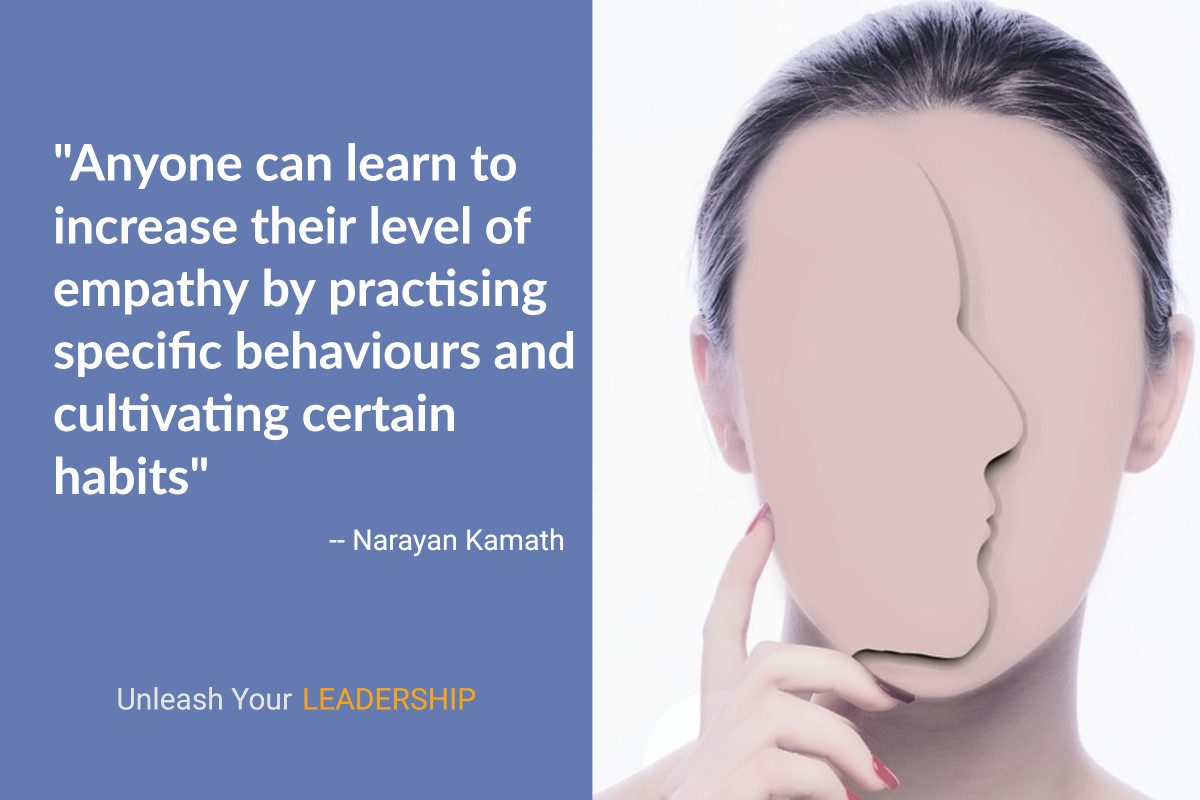
Empathy is a natural trait of humans - and some animals as well. However, while all of us have probably the same potential for empathy, it is activated to different extents in each one of us, and is also shaped by our life experiences. The good news however, is that almost anyone can learn to increase their level of empathy by practising specific behaviours and cultivating certain habits. A partial list follows:
Learn to be aware of and manage our own emotions. Empathy starts with being able to recognize the feeling within your own body. And unless we learn to manage our own emotions, we will be so caught up within ourselves that we will miss the cues necessary to understand how the other person is feeling.
Become a better listener. Listen not only for the words, but also the tone, body language and other emotional cues. Show that you care by periodically paraphrasing - why would anyone want to tell you their story if you didn’t care?
Develop a strong sense of curiosity. According to author Roman Krznaric , a common trait of highly empathic people is their “insatiable curiosity about strangers”. And this is most effective when we extend our curiosity to people whose experiences and worldviews are very different to ours.
Finding common ground. Sometimes when faced with people whose beliefs and behaviours are radically different from ours, it is difficult to go beyond our prejudice and feel empathy towards them. In such situations, forcing yourself to find commonalities with the other person, makes it easier to put aside prejudice and see them for the people they are.
Read the classics. Reading literary fiction has been shown to improve empathy. However, this does not work with popular (pulp) fiction - you are required to participate and fill in the gaps - not merely be entertained!
Resources
While a simple search throws up a large number of books on this topic, the ones that I found most useful were:
Empathy: Why It Matters, and How to Get It by Roman Krznaric and
Social Intelligence: The New Science of Human Relationships by Daniel Goleman
Image Credit : geralt on pixabay
